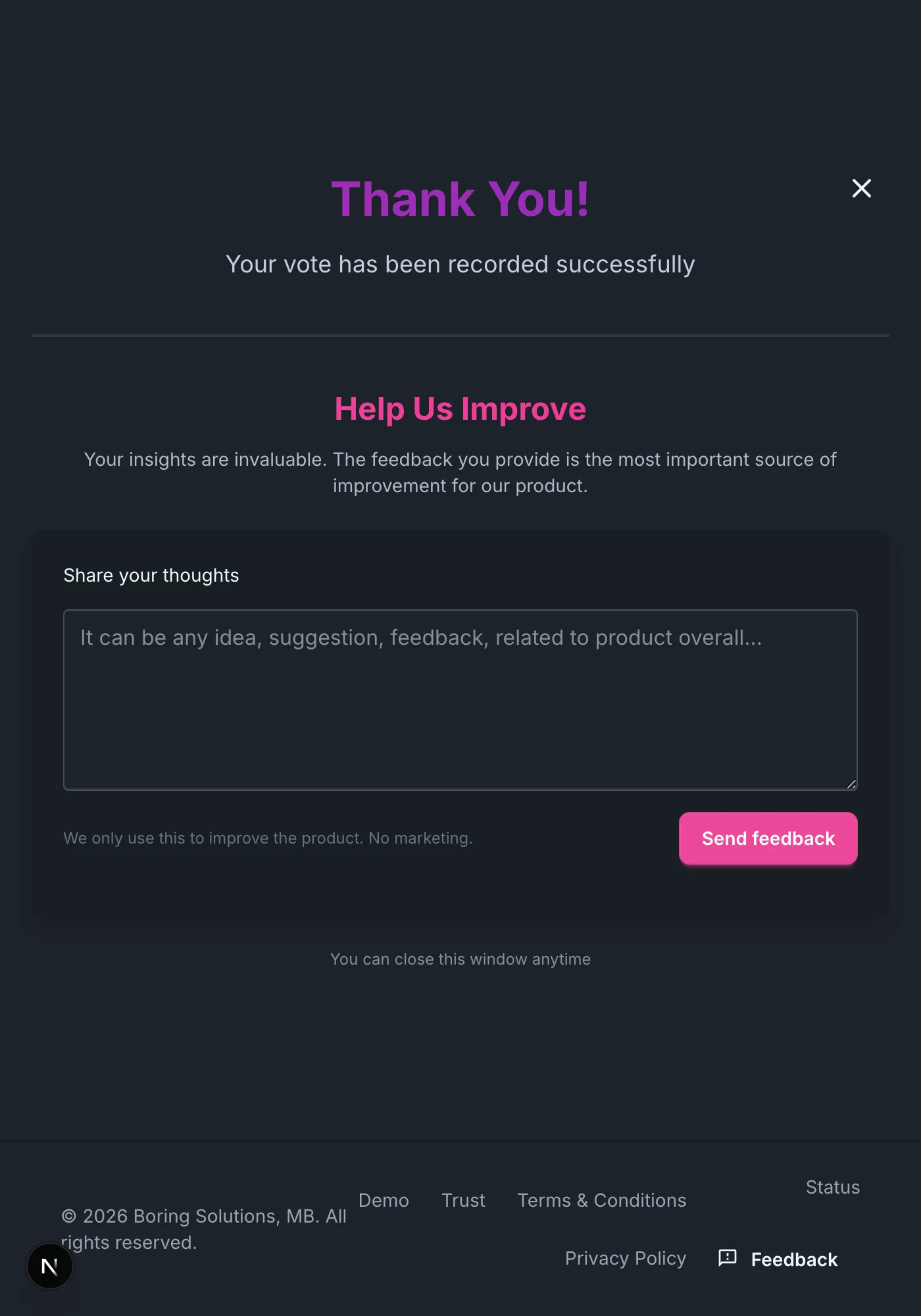
One click, done
Both Yes and No lead to the same short thank-you page — no account or extra steps required.
Loading page...
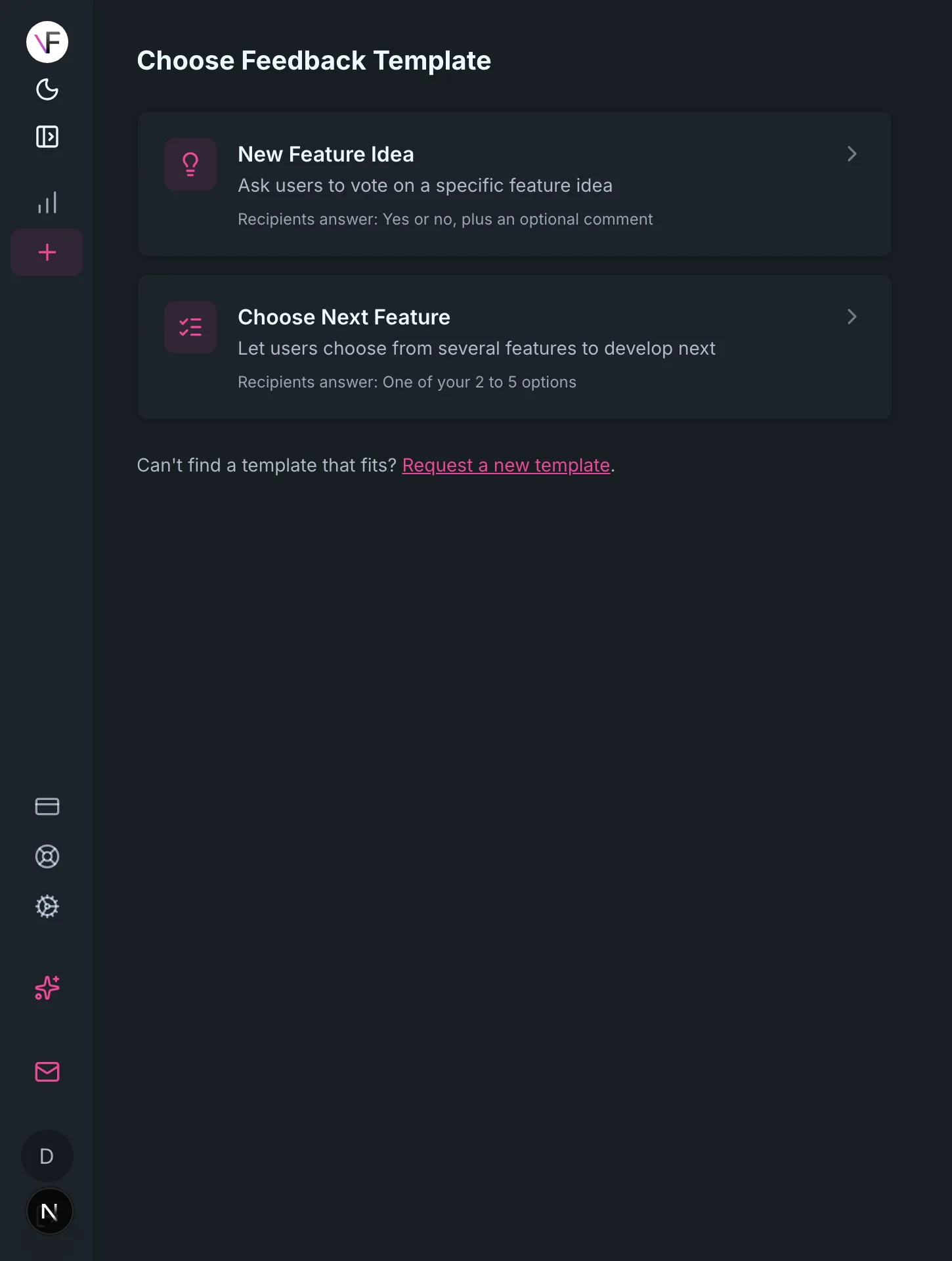
This walkthrough asks a sample customer base whether to build recurring tasks with custom repeat rules — the kind of specific, scoped idea a “New Feature Idea” vote is built for.
Start a New Feature Idea vote when you have one specific thing to validate. Customers answer yes or no and can leave an optional comment — no need to design multiple options first.
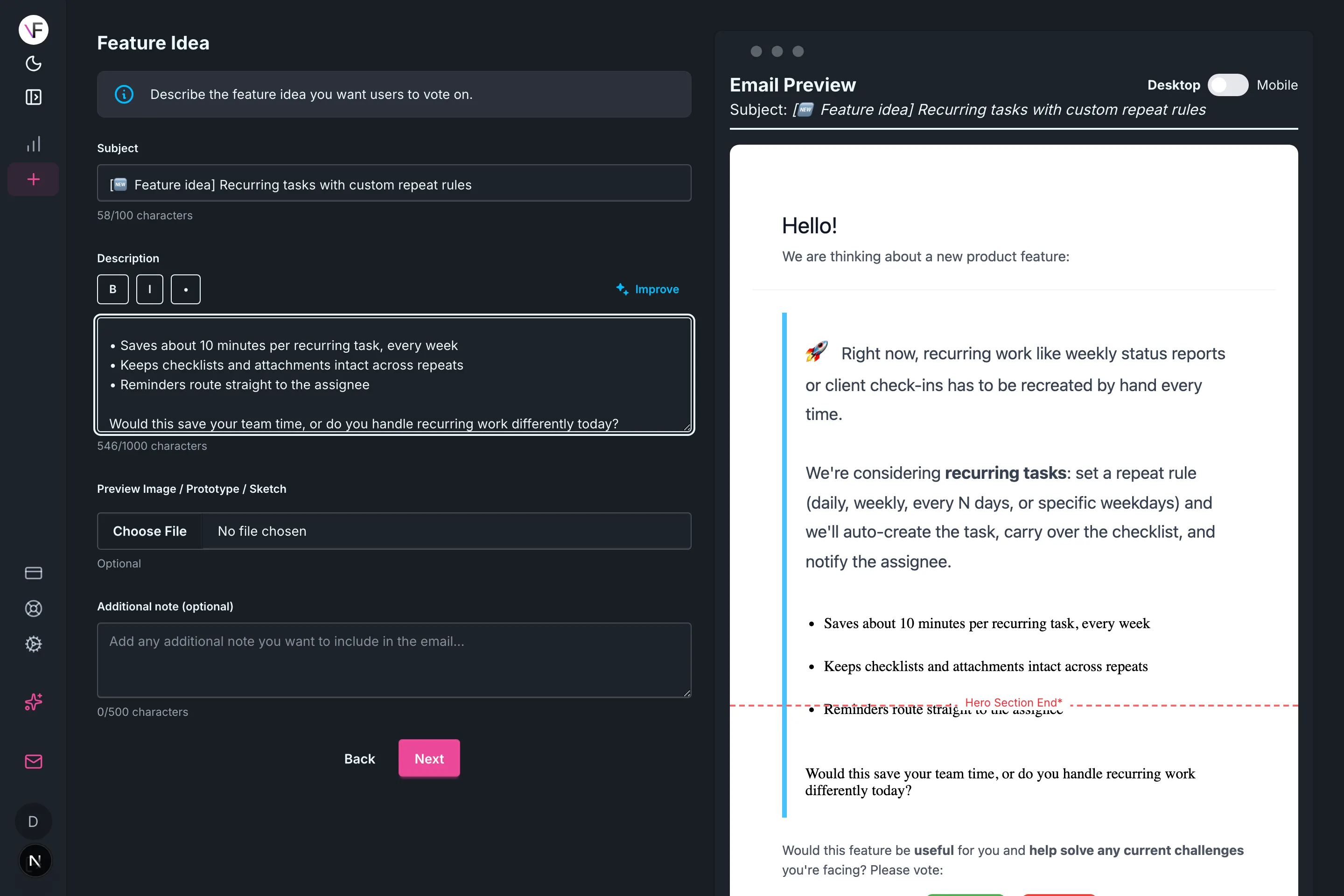
Write the subject and description on the left; the customer email preview updates live on the right, including the line where most inboxes cut off the message.
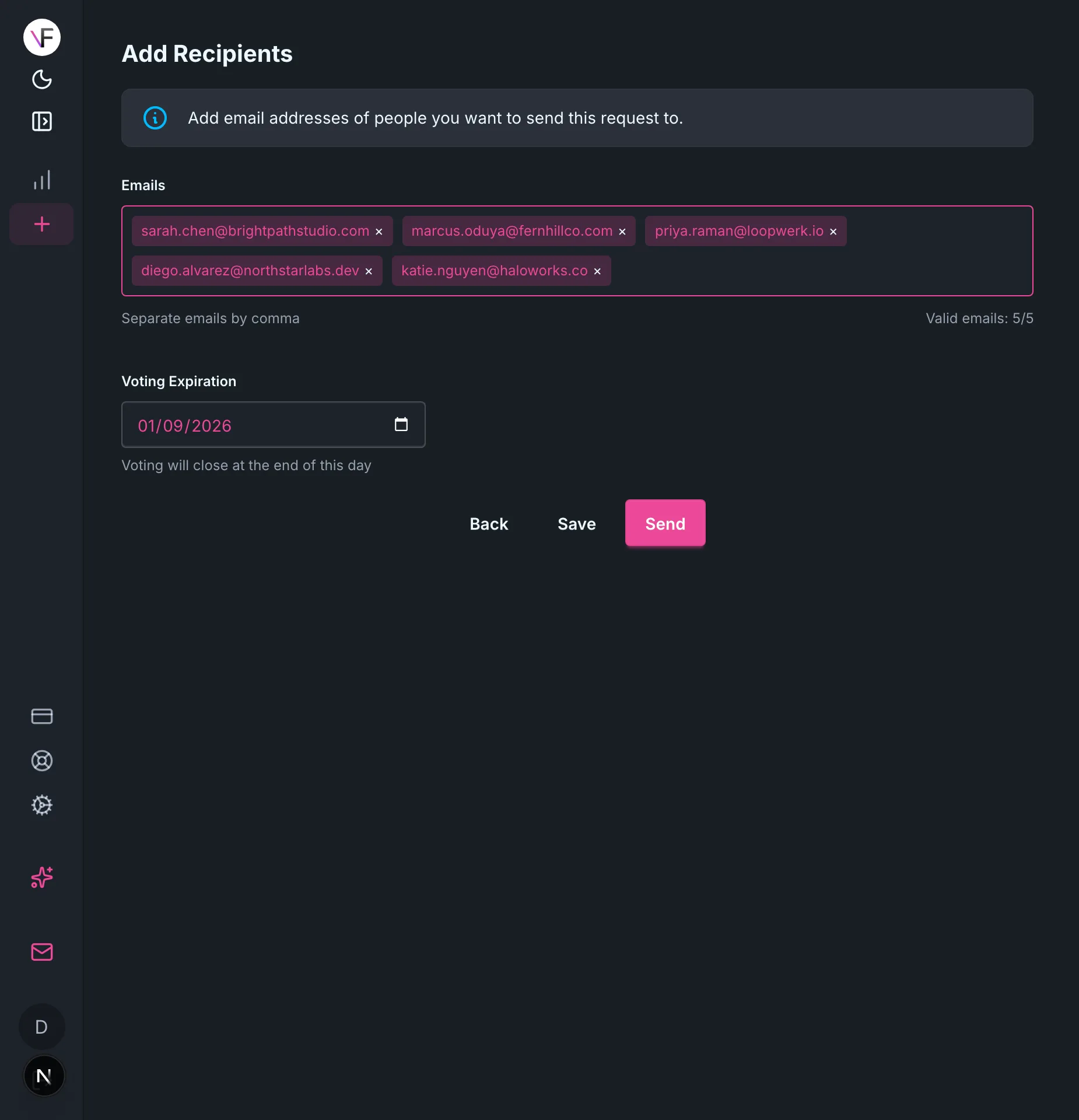
Paste in emails, set a voting deadline, then save as a draft or send. Nothing goes out until you choose to send it.
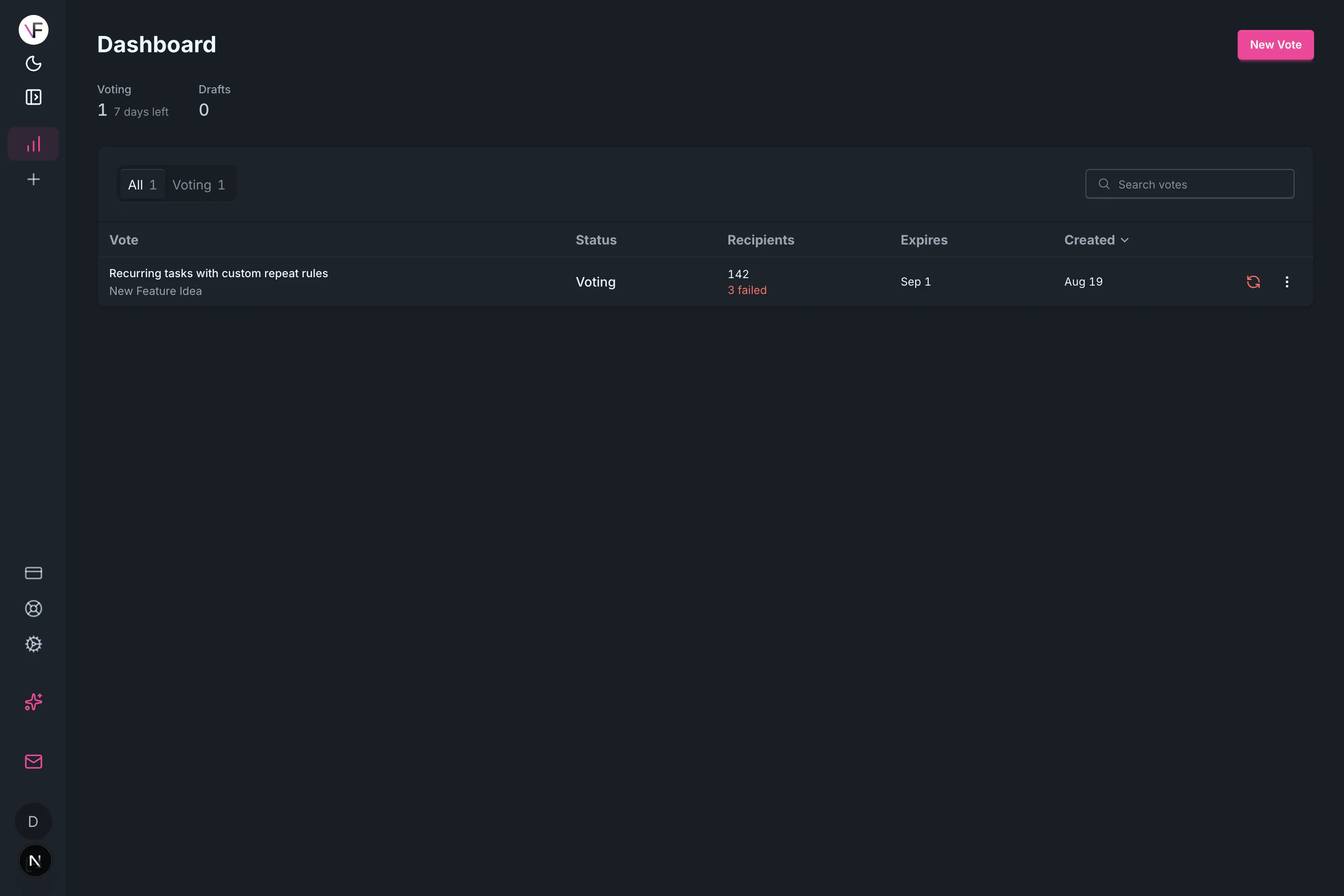
Every vote you send shows its status, recipient count, and expiration date in one list — so you always know what is still collecting responses.
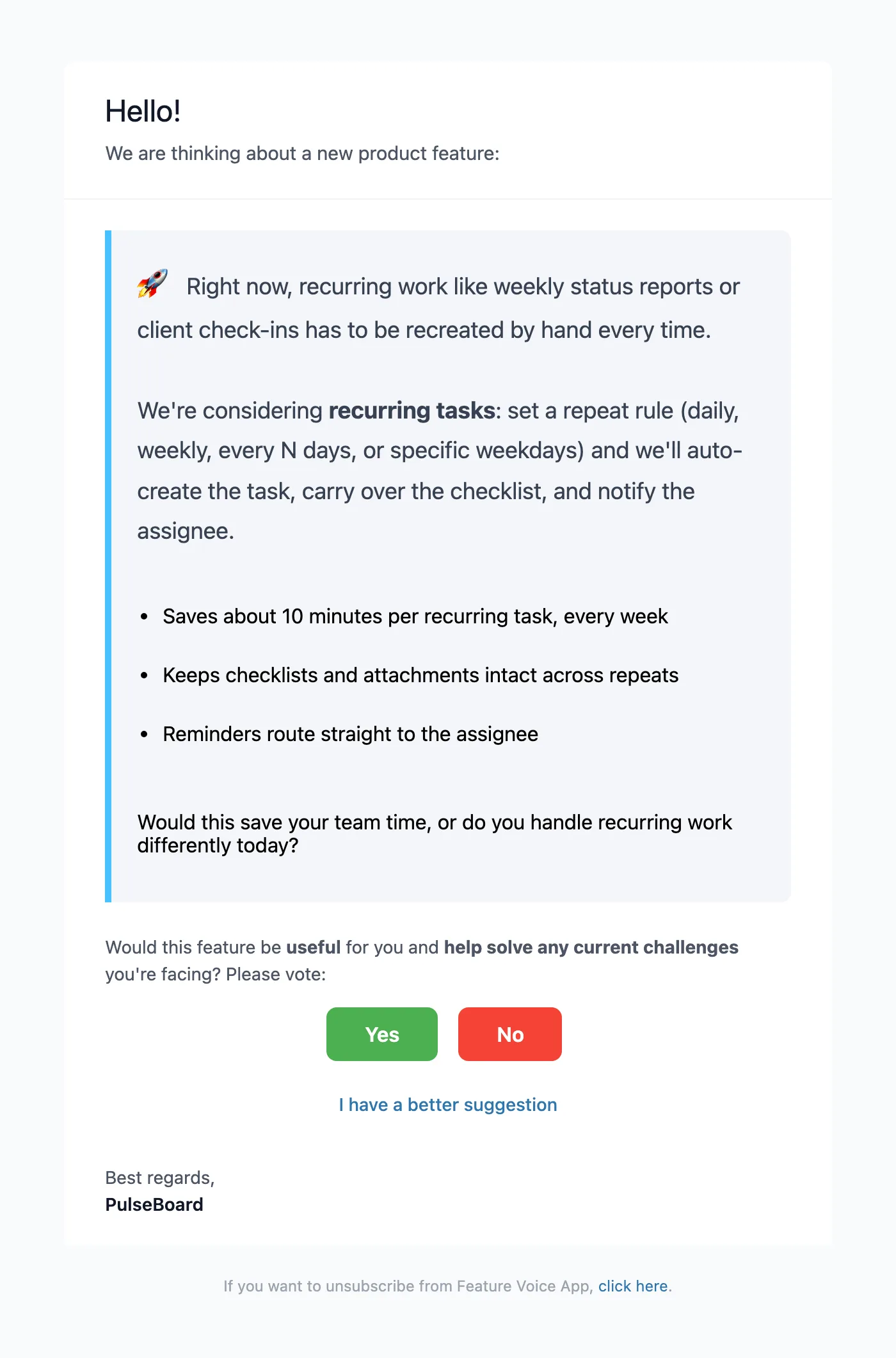
This is the actual email — not a mockup — rendered from the description on the left. Yes and No are one click each; “I have a better suggestion” skips the vote and goes straight to a comment box.
Both Yes and No lead to the same short thank-you page — no account or extra steps required.
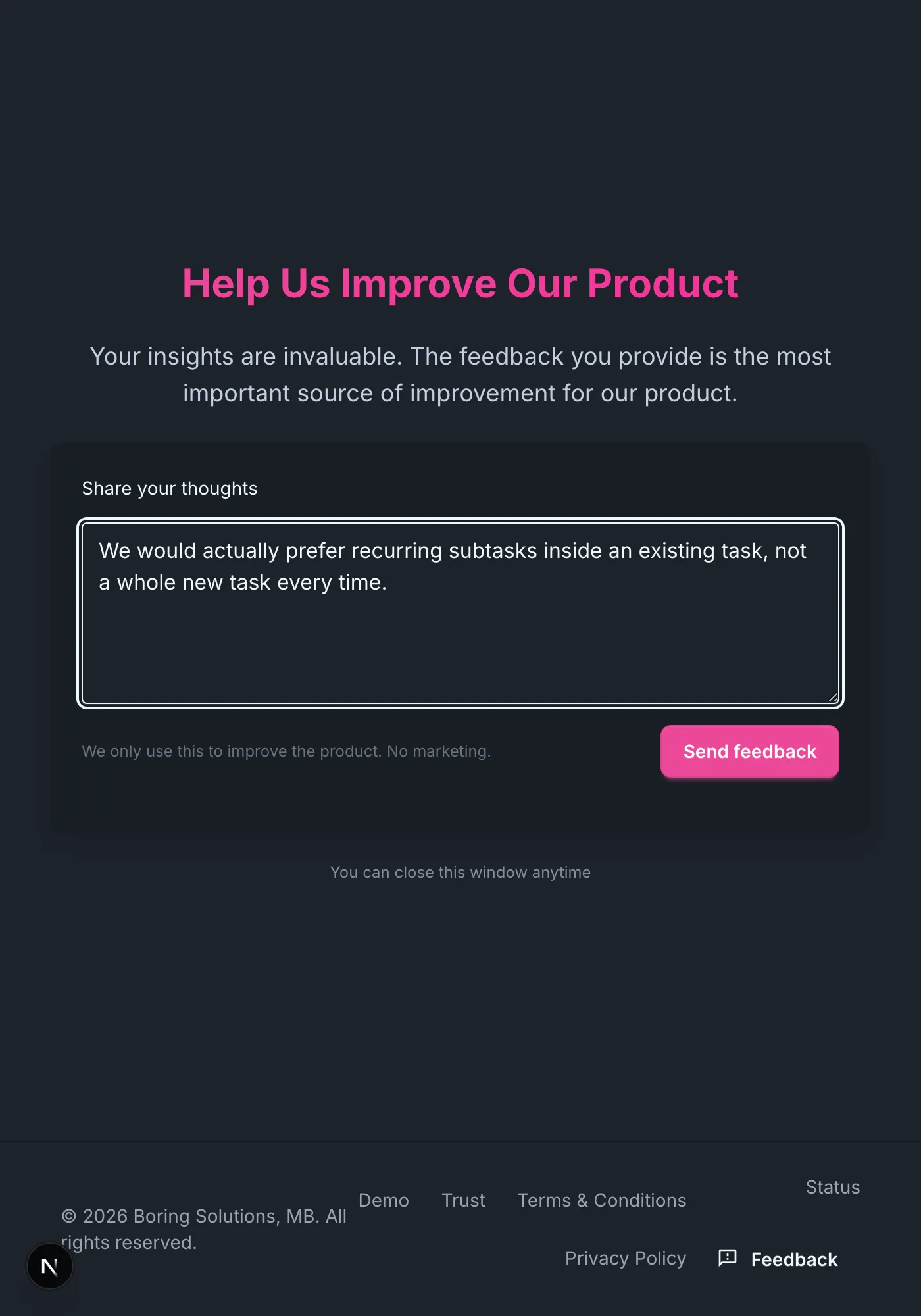
"I have a better suggestion" opens the same box directly — no vote required to leave a note.
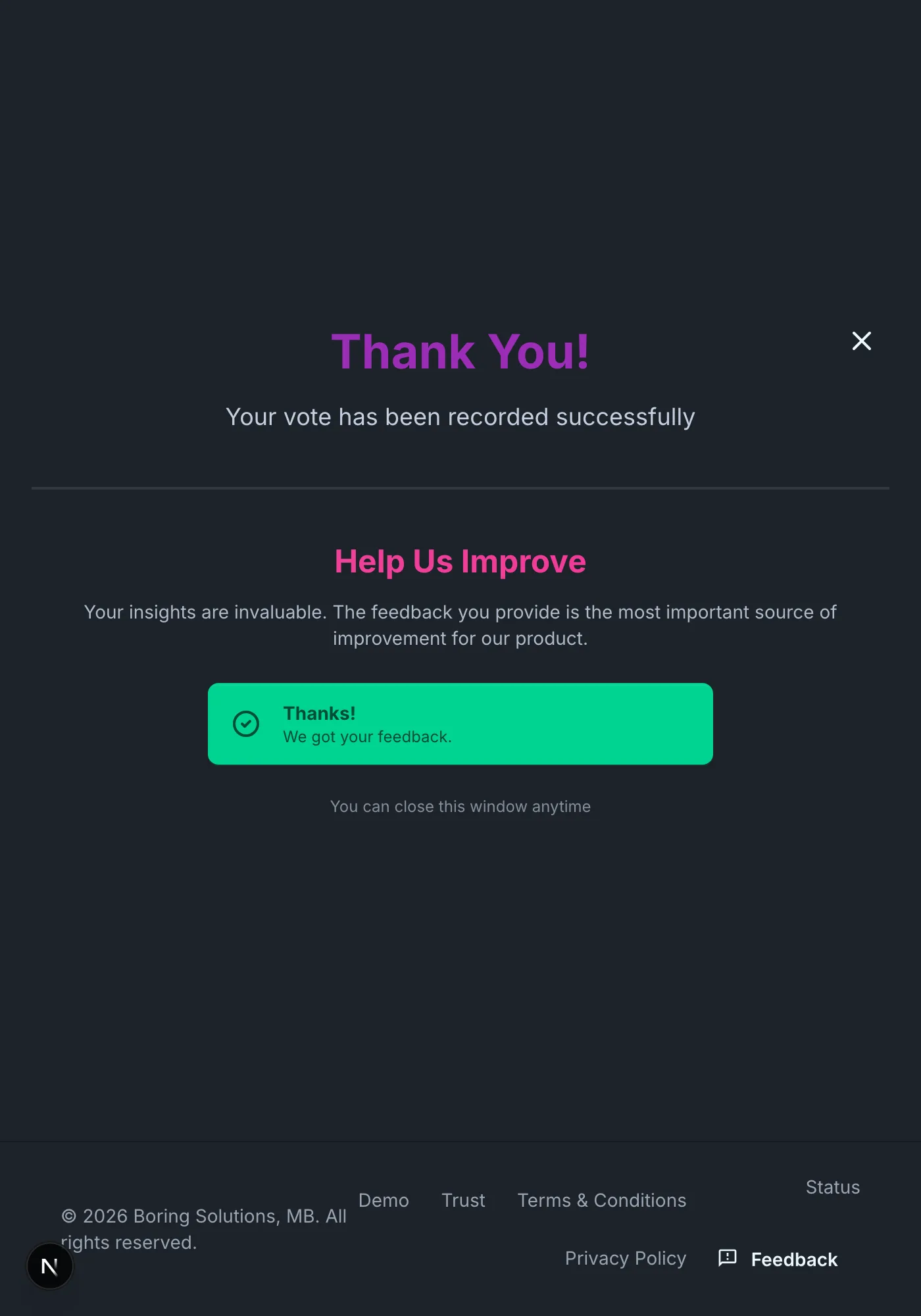
A comment left after voting yes or no gets its own quick confirmation, so customers know it was received.
This is the same vote after 142 sample customers received it. The emails, comments, and stats below are fabricated for this demo, but every number is computed by the real results dashboard — not hand-typed.
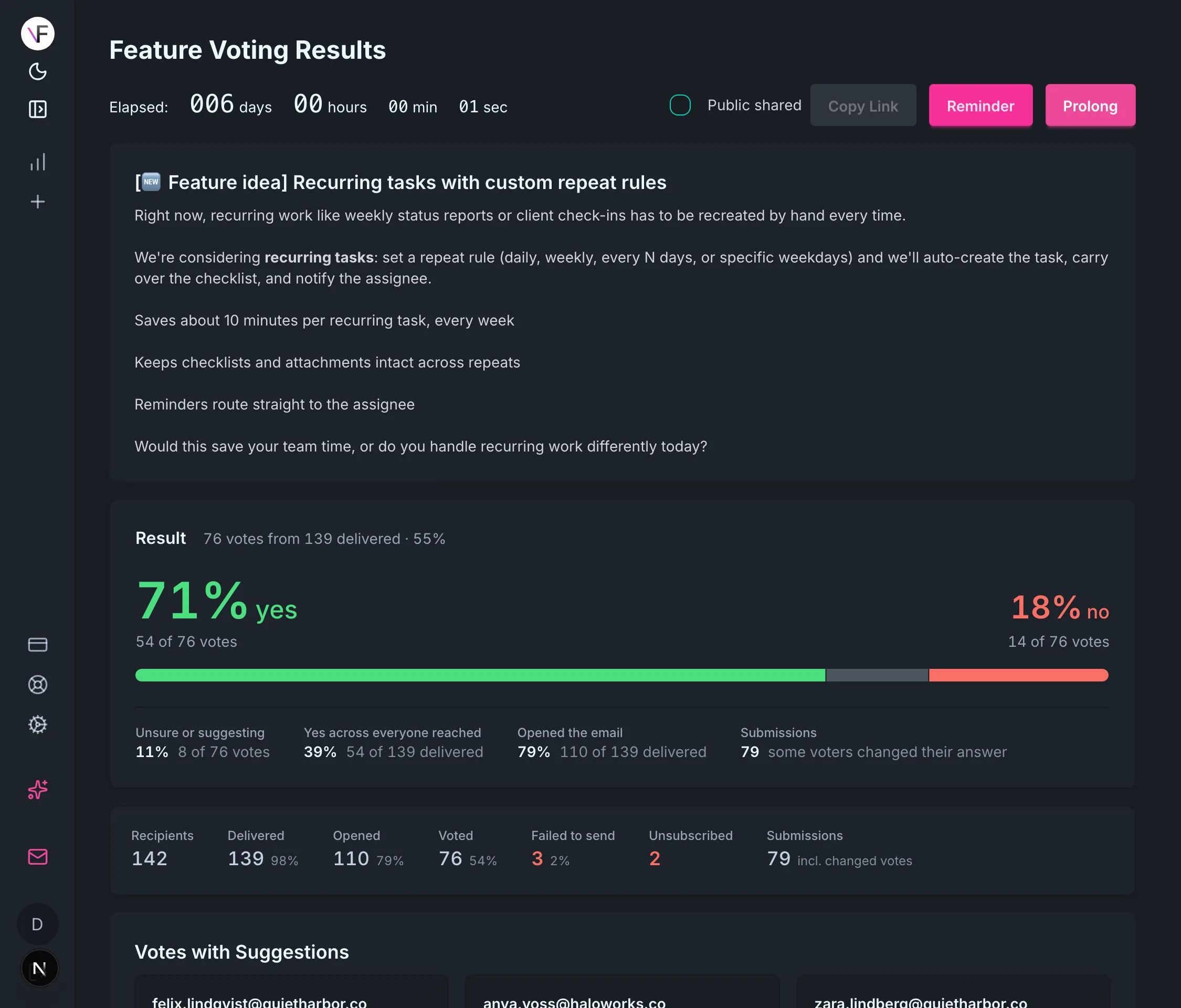
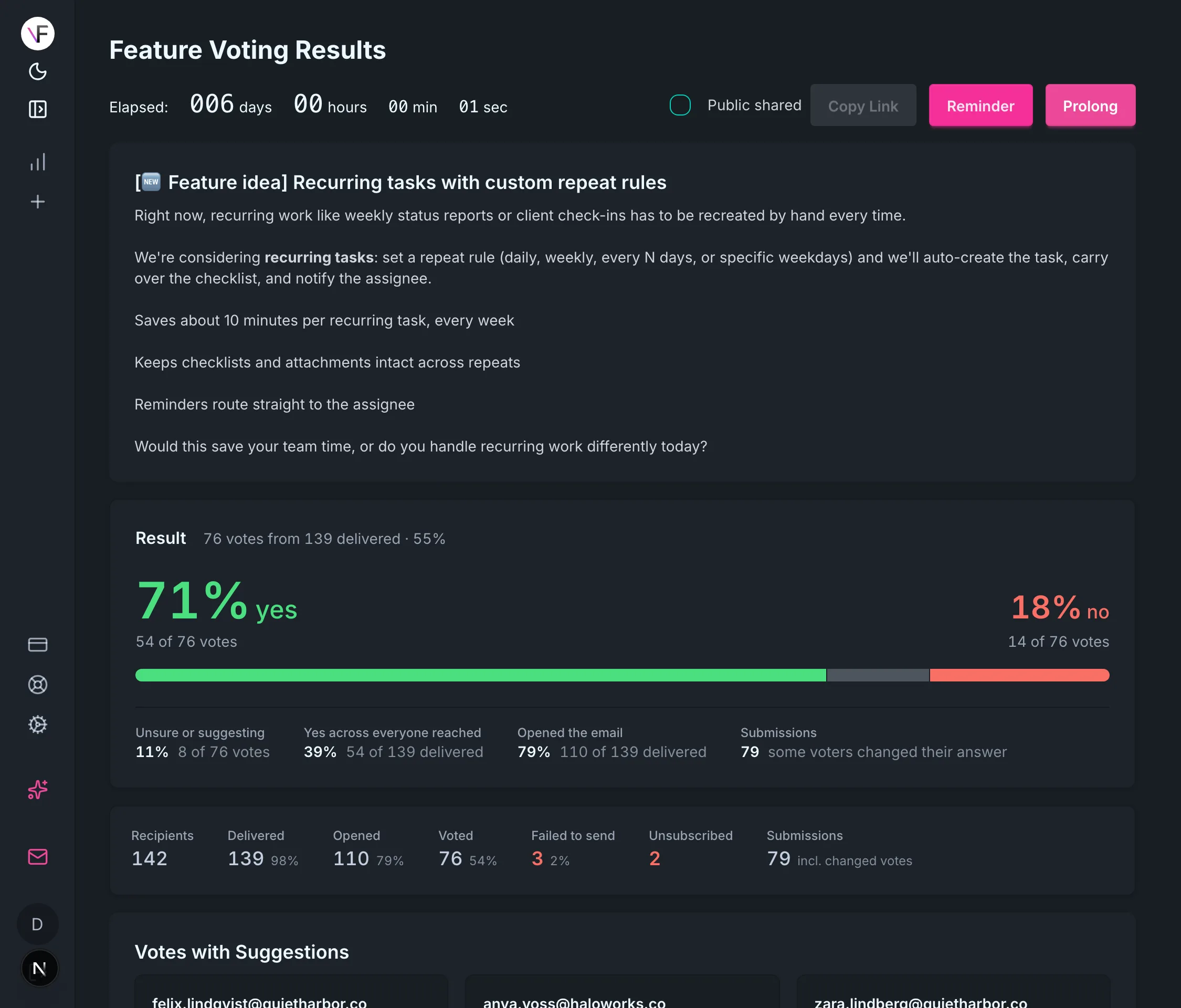
76 of 142 recipients voted — 71% yes. Response and open rates are broken out automatically.
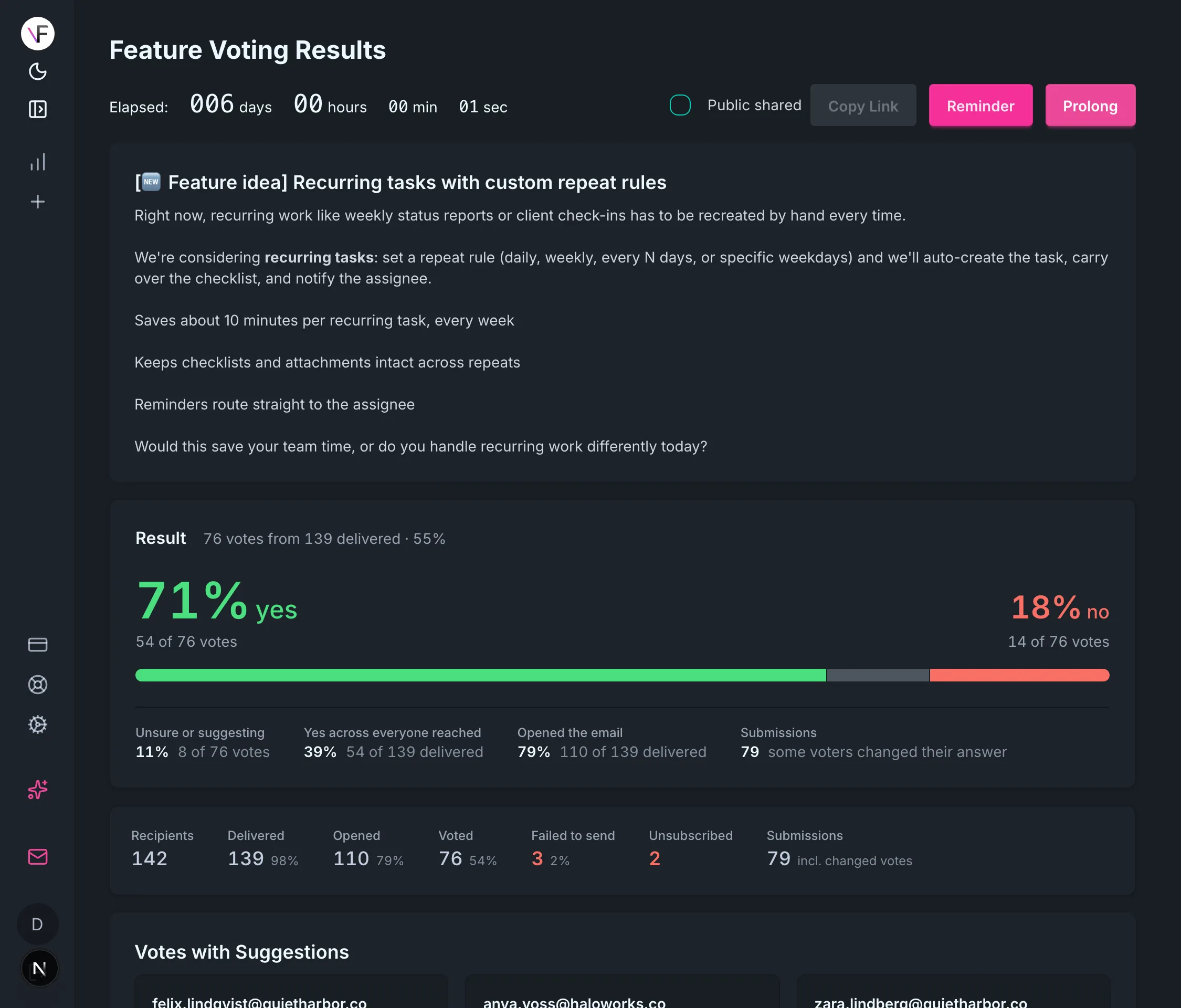
Anyone can leave a note with their vote, so you get context beyond a plain yes or no.
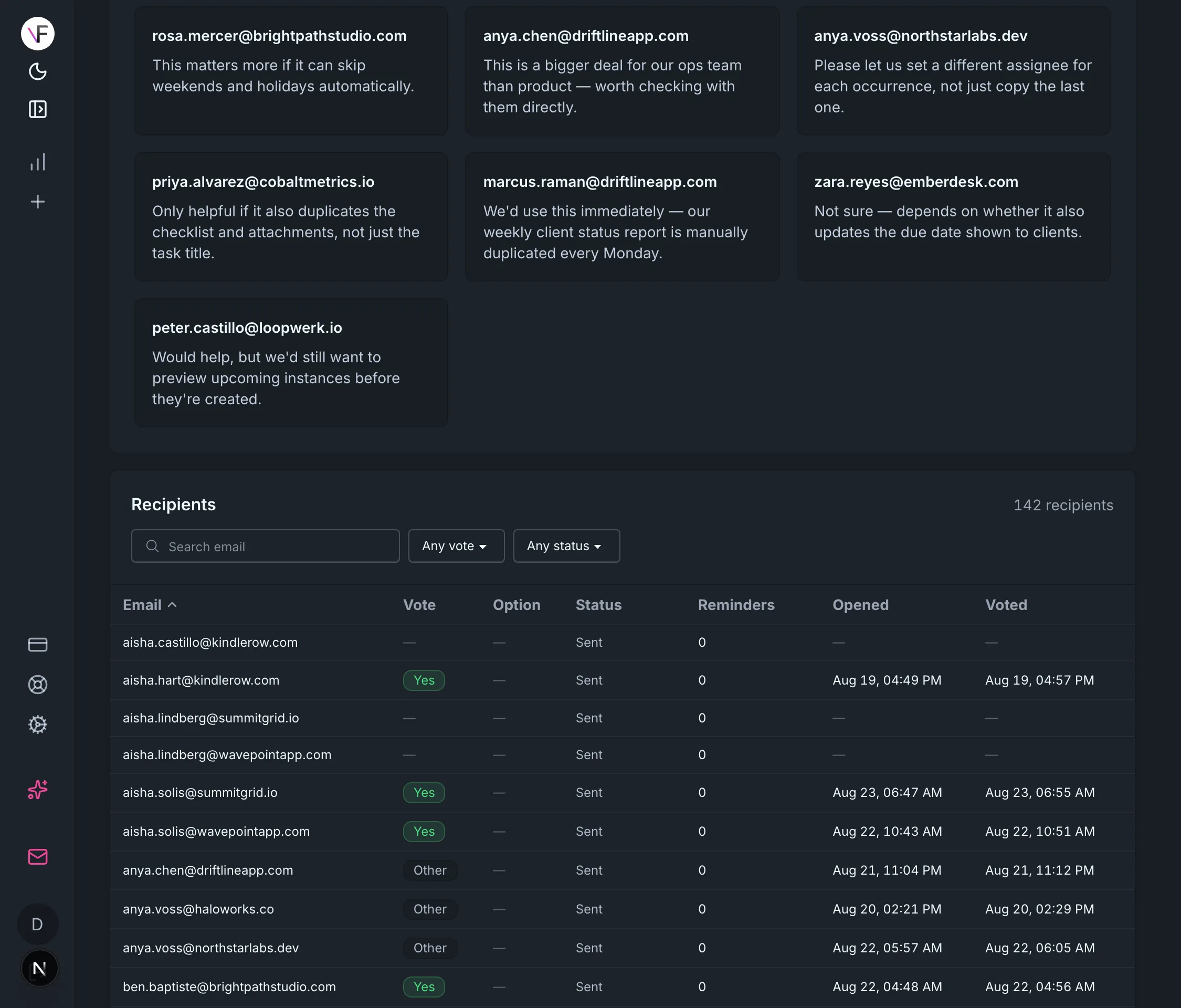
Search and filter the full recipient list: who opened it, how they voted, and when.
Keep the question short, send it to a selected group, and collect signal while the decision is still current.
No public board is required. You choose exactly who receives the vote and what product context they see.
Quantitative votes show direction. Comments explain why customers care, so the next action is clearer.